
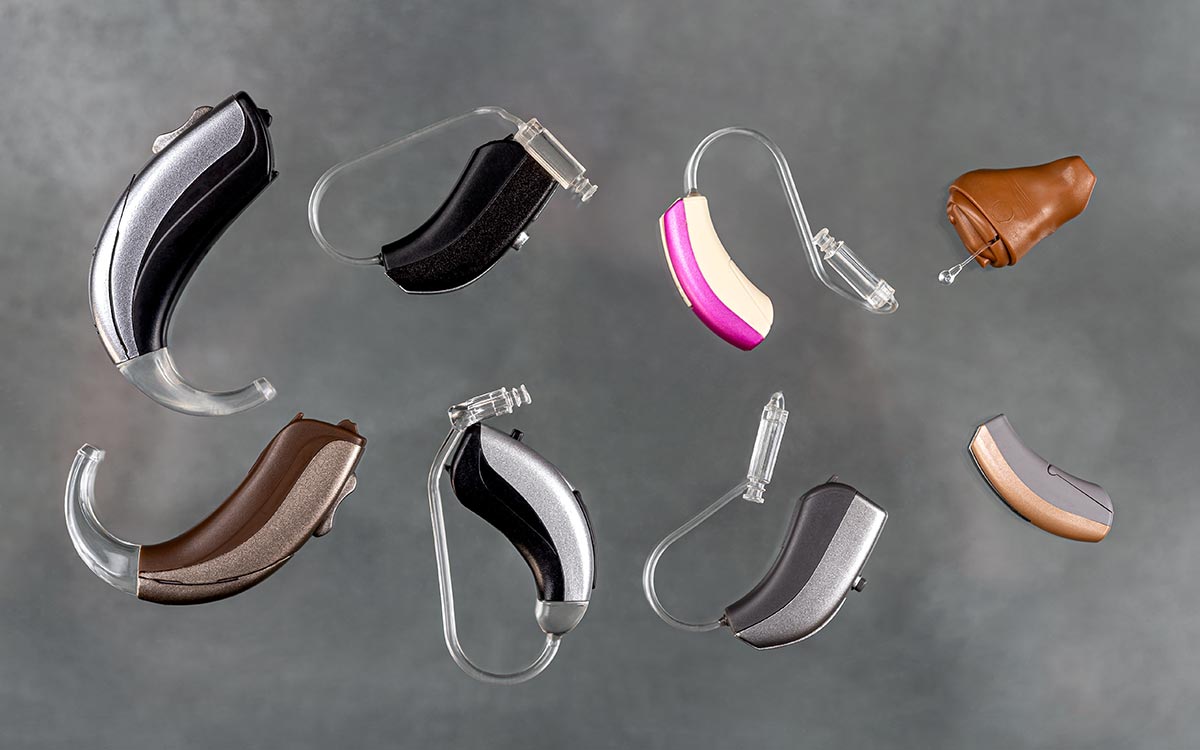
The total volume of hearing aid designs and technology levels on the market today can make the selection process feel complicated. However, a specialized hearing solution exists for every person’s unique needs and daily habits. Success lies in locating the specific aid that meets your personal preferences.
By learning about the distinctions between various hearing aid models, you can move forward with greater confidence and knowledge. Today, we’re breaking down the various hearing aid styles and what makes each one unique.
ITC (In-the-Canal) Hearing Solutions
Basic Summary:
ITC models are custom-made to sit within the ear canal, though a small part of the shell remains visible in the ear’s outer portion.
Key Selling Points:
- Highly subtle than larger models
- Custom-molded for ease
- Designed to treat low to mid-range hearing impairments
First-time wearers often gravitate toward ITC aids because they strike a perfect compromise between size and performance.
IIC (Invisible-in-Canal) Engineering
What they represent:
IIC hearing aids are the smallest custom design available. This style fits deep in the ear for a completely covert appearance.
Primary Motivations:
- Offers the most understated design of any hearing aid style
- Strategic placement enables a very organic listening experience
- Lightweight and easy
Because of their tiny stature, IIC devices typically work best for mild to moderate hearing loss and for those who prefer a nearly invisible option.
In-the-Ear (ITE) Hearing Aids
The Fundamentals:
ITE hearing aids fill either the whole outer ear (full-shell) or the lower portion (half-shell). They are custom-made to match the shape of your ear.
Why users prefer this style:
- The increased surface space offers space for extra functionality and extended power
- Ideal for individuals who find smaller devices hard to manipulate
- Suitable for mild to severe hearing loss
The all-in-one style of the ITE design makes it an ideal choice for those who dislike behind-the-ear equipment.
Exploring BTE Designs
Summary:
Positioned firmly on the back of the ear, BTE models sit on the outer ridge. These models utilize a custom earmold or tubing to direct sound inside.
Key Advantages:
- Very versatile and durable
- Useful for nearly every level of hearing impairment
- The size provides ample space for the latest connectivity features and rechargeable hardware
For those who prioritize a dependable device that is easy to manage and provides plenty of volume, BTE is an excellent choice.
Modern RIC Models
Design Specifications:
In a modern model, the speaker is detached from the main casing and placed inside the canal via an ultra-fine wire.
Market Interest:
- Provides a remarkably crisp and lifelike listening experience
- Small, lightweight, and comfortable
- A versatile solution that works for various degrees of auditory needs
Thanks to their comfort and visual appeal, RIC devices have become an industry standard.
Long-Term “Set and Forget” Devices
Overview:
These unique devices are designed to stay in the ear canal for a month or more, managed by your hearing specialist.
The Draw:
- Zero daily insertion or removal
- Offers a 100% covert solution for hearing health
- You can go about your whole life—including sports and rest—while wearing them
Extended-wear devices are ideal for patients who want a “set it and forget it” approach.
Wireless Smart Connectivity
What they represent:
These are modern units equipped with wireless technology to sync with your personal electronics and televisions.
Why users select them:
- Turn your hearing aids into cordless headphones for all your favorite audio
- Allows for quick, subtle adjustments to your hearing aids through digital software
- Provides the ultimate in convenience for those who use smartphones regularly
This wireless technology is located in most modern behind-the-ear and in-the-canal models.
Alternative Implantable Options
Procedure Info:
A surgical method that works by shaking the tiny bones inside the ear to provide amplified audio.
Medical Motivations:
- Provides a solution for individuals with anatomy that prevents the use of conventional aids
- Comfortable alternative for chronic ear issues related to traditional devices
These devices need an exhaustive medical review by an ear, nose, and throat expert.
Selecting Your Ideal Hearing Solution
Selecting an instrument is an individualized journey that takes into account your hearing severity, lifestyle habits, and visual preferences. By visiting an expert, you can investigate various models and see which one feels most natural to you.
Start moving toward an environment of superior sound by arranging an appointment with a hearing specialist. It is the most important step you can make toward a more vibrant and confident life.
Sources:
https://www.mayoclinic.org/diseases-conditions/hearing-loss/in-depth/hearing-aids/art-
20044116
https://www.hearinglife.com/hearing-aids/types
https://www.nidcd.nih.gov/health/hearing-aids